Fertile Window vs Ovulation Day: When Can You Get Pregnant?
Your fertile window is the stretch of about six days each cycle when sex can lead to pregnancy: roughly the five days before ovulation plus the day after. Ovulation day is just one moment inside it. Because sperm can survive for days but the egg lives for only 12 to 24 hours, the days just before ovulation are often the most fertile of all.
Key takeaways
- The fertile window runs from about five days before ovulation to one day after.
- Ovulation usually happens 12 to 16 days before your next period starts.
- The egg survives 12–24 hours, sperm three to five days, which is why the days before ovulation count.
- Having sex every 2 to 3 days covers the fertile window without needing perfect timing.
- Combining a calendar with body signs gives a much more accurate fertile window.
Fertile window vs ovulation day: what's the difference?
Ovulation day is the day your ovary releases an egg. It's a single event that happens once per cycle. The fertile window is the group of days in which sex can lead to pregnancy. It is much wider than ovulation day, and ovulation sits near its end.
According to the Cleveland Clinic, sex can lead to pregnancy from about five days before ovulation to one day after. That's because the egg survives only about 12 to 24 hours once released, while sperm can live in the body for three to five days (Cleveland Clinic). Sperm that arrive a few days early can be waiting when the egg appears.
When is ovulation day?
Ovulation usually happens 12 to 16 days before your next period starts (NHS 111 Wales). In a 28-day cycle that is around day 14, but in a 35-day cycle it may be around day 21, and in a 24-day cycle around day 10.
This is why ovulation isn't always on day 14. The first half of the cycle (before ovulation) varies the most between people and from month to month, while the time from ovulation to your period is more stable. You can learn your own timing by watching the signs of ovulation.
How to calculate your fertile window
The simple estimate
- Note the length of your cycle, from day 1 of one period to the day before the next.
- Subtract 14 to estimate your ovulation day (for example 30 − 14 = day 16).
- Count back five days and forward one: your estimated fertile window (days 11 to 17 in this example).
If your cycle length varies
The Cleveland Clinic describes a calendar method based on your last six months of cycles: subtract 18 from your shortest cycle to find the first fertile day, and subtract 11 from your longest cycle to find the last. For cycles between 27 and 32 days, that gives a fertile window of roughly days 9 to 21.
Calendar calculations are only estimates. Any cycle can be shorter or longer than usual, especially with stress, illness or travel, so treat the result as a starting point and refine it with body signs.
Make your fertile window more accurate
Body signs show what is actually happening this cycle, rather than what usually happens:
- Cervical mucus: when it becomes clear, wet and stretchy like egg white, you are in or near your most fertile days. Learn more in discharge during your cycle.
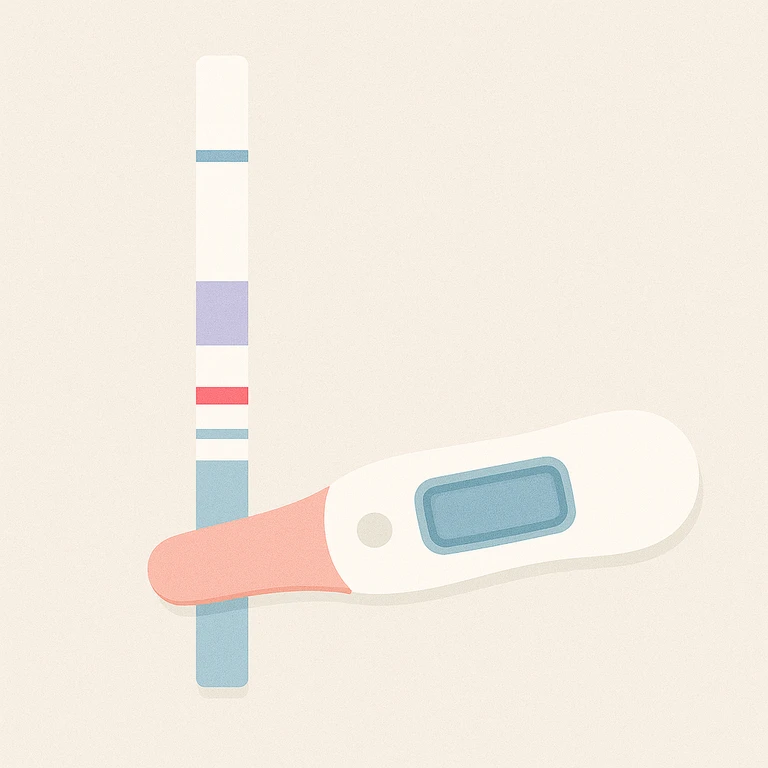
- Ovulation tests: a positive LH test means ovulation is likely within about 36 hours. See our ovulation test guide.
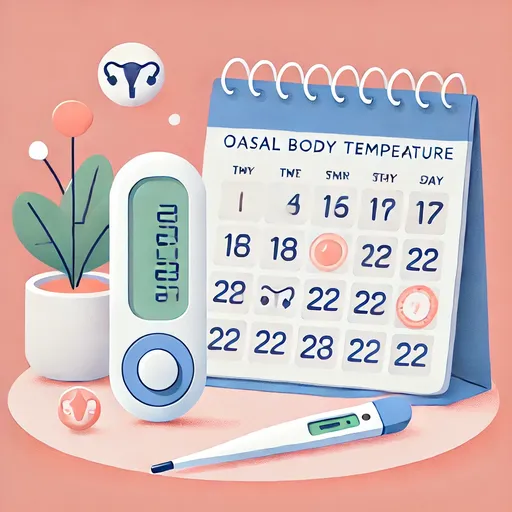
- Basal body temperature: a sustained rise confirms ovulation has passed and your fertile window has closed for this cycle. See BBT charting.
Best time to try for a baby
You don't need to pinpoint the exact hour of ovulation. The NHS advises having sex every 2 to 3 days without contraception, which means sperm will usually be present whenever ovulation happens (NHS 111 Wales).
If you prefer to focus on your fertile window, aim for sex every day or every other day from a few days before your expected ovulation until the day after. Timing sex very precisely can feel stressful, so many couples find the regular approach easier to keep up.
Be patient with yourself: for people under 40 who have regular sex without contraception, there is an 8 in 10 chance of getting pregnant within a year, according to the NHS. Not conceiving in the first few months is common and not a sign that something is wrong.
Common myths about fertile days
- Myth: you can only get pregnant on ovulation day. Sex in the days before ovulation can also lead to pregnancy, because sperm survive for several days.
- Myth: everyone ovulates on day 14. Ovulation depends on your cycle length and can shift each month.
- Myth: you can't get pregnant during your period. It's unlikely, but with a short cycle and long bleeding, your fertile window can start soon after your period ends, and sperm can survive until then.
- Myth: an app knows your exact ovulation day. Calendar predictions are estimates; adding body signs makes them far more accurate.
Track your fertile window
A period tracker like Femininity estimates your fertile window from your cycle history and updates it as you log cervical mucus, ovulation tests and temperature. Over a few cycles, you'll see how your real fertile days compare with the prediction, and the estimates become more personal.
When to see a doctor
- You have been trying to conceive for over a year, or for 6 months if you are 36 or older.
- Your periods are very irregular, or absent for 3 months or more, which makes ovulation hard to predict.
- You never see signs of ovulation, such as a positive LH test or a temperature rise.
- You or your partner have a known condition that may affect fertility, such as PCOS, endometriosis or previous pelvic infection.
- You have sudden severe pelvic pain or heavy bleeding (seek urgent care).
Frequently asked questions
How many days is the fertile window?
About six days: the five days before ovulation plus the day after, according to the Cleveland Clinic. The two or three days leading up to ovulation are usually the most fertile.
Is ovulation day the most fertile day?
Ovulation day is fertile, but the day or two before it are at least as fertile, because sperm are already waiting when the egg is released. After ovulation, fertility drops quickly.
Can you get pregnant the day after ovulation?
It is possible on the day after ovulation, because the egg survives for 12 to 24 hours. After that, the chance of pregnancy in that cycle becomes very low.
Can you get pregnant outside your fertile window?
It is very unlikely, but because ovulation can come earlier or later than predicted, your actual fertile window may not match a calendar estimate. That's why body signs are useful.
How do I know my fertile window if my periods are irregular?
Calendar estimates are less reliable with irregular cycles. Watch cervical mucus, use ovulation tests and chart your temperature, or simply have sex every 2 to 3 days throughout the cycle.
How accurate are ovulation calculators?
They give an estimate based on average cycles. They work best for regular cycles and become much more accurate when combined with real body signs.
How often should we have sex to get pregnant?
The NHS recommends every 2 to 3 days without contraception. Daily sex is fine too, if you both want to, especially during the fertile window.
How long does it take to get pregnant?
For people under 40 who have regular unprotected sex, there is about an 8 in 10 chance of pregnancy within a year. Some couples take longer even when nothing is wrong.
Track it in Femininity
Log your symptoms, see your cycle phases and get tips like this one at the right moment. Free, private and works offline.

Sources
- Cleveland Clinic – Ovulation
- NHS 111 Wales – When you can get pregnant
- Cleveland Clinic – Ovulation predictor kits: what to know
This article is for general information only and is not a substitute for professional medical advice, diagnosis or treatment. Always talk to a doctor or midwife about your own health.