8 Signs of Ovulation: How to Tell When You're Ovulating
The main signs of ovulation are clear, stretchy "egg white" cervical mucus, a small rise in your basal body temperature after ovulation, a positive LH ovulation test and, for some people, one-sided pelvic twinges. No single sign is perfect, but tracking two or three together over a few cycles shows you when you usually ovulate.
Key takeaways
- Ovulation usually happens about 14 days before your next period, not always on day 14.
- Slippery, egg-white cervical mucus is one of the clearest signs that ovulation is close.
- Basal body temperature rises after ovulation, so it confirms ovulation rather than predicting it.
- A positive LH test usually means ovulation within about 36 hours.
- Combining signs over 2–3 cycles gives a far more reliable picture than any one sign alone.
What is ovulation and when does it happen?
Ovulation is the moment one of your ovaries releases an egg. It is triggered by a surge of luteinising hormone (LH), and in a textbook 28-day cycle it happens around day 14, counting the first day of your period as day 1 (Cleveland Clinic).
Real cycles are rarely textbook. Cycles from 21 to 35 days are considered normal, so ovulation can fall much earlier or later. A more useful rule of thumb: ovulation tends to happen about 14 days before your next period, which is why it helps to know your own cycle length.
Once released, the egg survives for about 12 to 24 hours, while sperm can survive in the body for three to five days. That is why your fertile days start several days before ovulation. We explain this in detail in fertile window vs ovulation day.
The 8 signs of ovulation
These are the ovulation symptoms most people can learn to notice. You may have all of them, a few, or only one, and that is completely normal.
1. Egg-white cervical mucus
In the days just before ovulation, cervical mucus turns clear, wet and slippery, like raw egg white, and you may be able to stretch it between two fingers. This fertile-quality mucus helps sperm travel, so it is one of the most useful signs that ovulation is close. See how discharge changes across the month in discharge during your cycle.
2. A rise in basal body temperature (BBT)
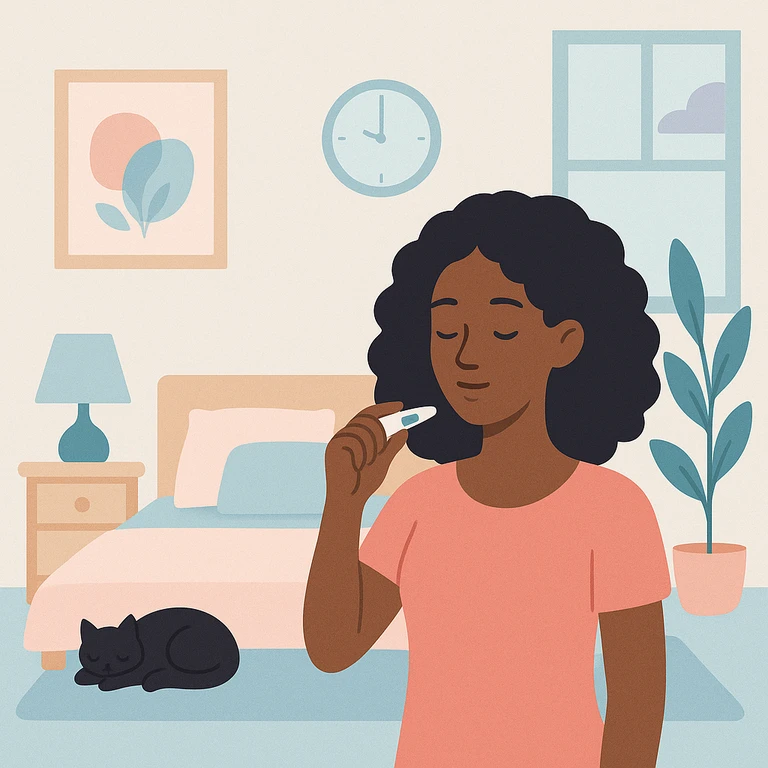
Your resting temperature rises slightly after ovulation, typically about 0.5 to 1 °F (roughly 0.3 to 0.6 °C), and stays higher until your next period. Because the rise comes after the egg is released, BBT confirms that ovulation has happened rather than warning you in advance. Our BBT charting guide shows how to measure it properly.
3. A positive LH (ovulation) test
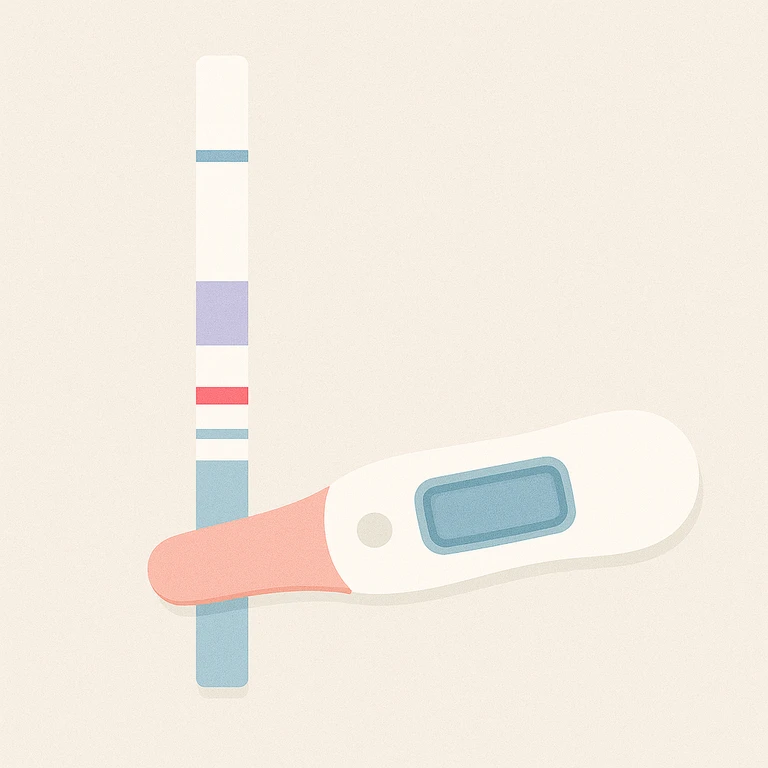
Home ovulation tests detect the LH surge in your urine. A positive result usually means ovulation is likely within about 36 hours, which makes them one of the few signs that predict ovulation ahead of time. Learn when and how to test in our ovulation test guide.
4. Ovulation pain (mittelschmerz)
Some people feel a dull ache or sudden sharp twinges on one side of the lower tummy around ovulation. The NHS notes it can last from a few minutes to 1 or 2 days and may switch sides from month to month, depending on which ovary releases the egg (NHS).
5. Light spotting
A little light bleeding or spotting mid-cycle can happen around ovulation. It should be very light and short-lived.
6. Higher sex drive
Many people notice an increased libido around their most fertile days, a change linked to the hormone shifts before ovulation.
7. Breast tenderness
Hormone changes around and after ovulation can leave breasts feeling tender or sensitive for some people.
8. Changes in your cervix, energy and mood
Some people who check their cervix notice it feels softer and higher around ovulation, and many describe feeling more energetic, social or focused in the days before. These clues are more subtle and personal, but they become easier to recognise once you write them down.
How to know when you ovulate: combining the signs
No single sign is foolproof, so the best way to know when you ovulate is to track a few of them together. Doctors call this a symptothermal approach: mucus and LH tests point to ovulation approaching, while BBT confirms it.
- Note your period dates and cycle length so you know roughly when to start watching.
- Check cervical mucus daily, for example when you go to the toilet, and record whether it is dry, sticky, creamy or egg-white.
- Take your BBT every morning at the same time, before getting out of bed.
- Use LH tests from a few days before you expect to ovulate, if you want advance warning.
- Log any twinges, spotting or mood changes to spot your personal pattern.
Expect a learning curve. The NHS says it can take 2 to 3 menstrual cycles to understand your fertility signs properly (NHS).
Common myths about ovulation symptoms
- Myth: everyone ovulates on day 14. Ovulation timing depends on your cycle length and can shift from month to month.
- Myth: no ovulation pain means no ovulation. Many people ovulate without feeling anything at all.
- Myth: a temperature rise predicts ovulation. It confirms ovulation afterwards; by the time it rises, your most fertile days have usually passed.
- Myth: one positive LH test guarantees ovulation. It shows the hormone surge, not that an egg was definitely released. BBT can help confirm it.
Irregular cycles and ovulation signs
If your cycles vary a lot in length, calendar predictions are less reliable, so body signs like mucus and BBT become even more useful. Very irregular or absent periods can sometimes mean you are not ovulating regularly, which can happen with conditions such as PCOS, thyroid problems, high stress, intense exercise or significant weight changes.
If you are not seeing signs of ovulation over several cycles, it is worth talking to a doctor, especially if you are trying to get pregnant.
Track your ovulation signs in one place
Patterns are much easier to see when everything is in one chart. A period tracker like Femininity lets you log cervical mucus, BBT, ovulation tests, pain and mood day by day, then shows your predicted fertile window alongside what your body is actually telling you.
After a few cycles you will usually notice that your signs line up at roughly the same point each month, and that is your personal ovulation pattern.
When to see a doctor
- Ovulation-type pain that is severe, does not improve with painkillers or keeps coming back.
- Sudden, severe pelvic pain, especially with fever, fainting or if you might be pregnant (seek urgent care).
- Bleeding between periods that is heavy, frequent or happens after sex.
- Periods that are very irregular, absent for 3 months or more, or cycles shorter than 21 or longer than 35 days.
- No signs of ovulation over several cycles, or trying to conceive for 12 months (6 months if you are 35 or older) without success.
Frequently asked questions
How many days after my period do I ovulate?
It depends on your cycle length. Ovulation usually happens about 14 days before your next period, so in a 28-day cycle that is around day 14, but in a 35-day cycle it may be closer to day 21. Tracking your signs shows your own timing.
What does ovulation discharge look like?
Around ovulation, cervical mucus usually becomes clear, wet, slippery and stretchy, similar to raw egg white. Before and after this, it tends to be drier, sticky or creamy.
Can you ovulate without any symptoms?
Yes. Many people ovulate without noticing pain, mood changes or other symptoms. Tracking mucus, BBT or LH tests can reveal ovulation even when you do not feel it.
How long do ovulation symptoms last?
Egg-white mucus usually lasts a few days before ovulation. Ovulation pain lasts from a few minutes to 1 or 2 days. The temperature rise stays until your next period starts.
Is it normal to have ovulation pain every month?
Mild one-sided twinges around ovulation are common and usually harmless. If the pain is severe, keeps coming back or does not improve with painkillers, see a doctor.
Can I ovulate twice in one cycle?
Only one ovulation event happens per cycle, although occasionally two eggs are released within about a day of each other, which is how non-identical twins happen. You cannot have a second, separate ovulation later in the same cycle.
Do ovulation apps tell me exactly when I ovulate?
Calendar-based predictions are estimates. Apps become much more accurate when you add real body signs such as BBT, mucus and LH test results, because these show what is actually happening in your cycle.
Can stress delay ovulation?
Yes, significant stress, illness, travel or sudden lifestyle changes can delay ovulation, which also delays your next period. This is why ovulation dates can move from month to month.
Track it in Femininity
Log your symptoms, see your cycle phases and get tips like this one at the right moment. Free, private and works offline.

Sources
This article is for general information only and is not a substitute for professional medical advice, diagnosis or treatment. Always talk to a doctor or midwife about your own health.