When to See a Fertility Specialist: Timelines, Tests and What to Expect
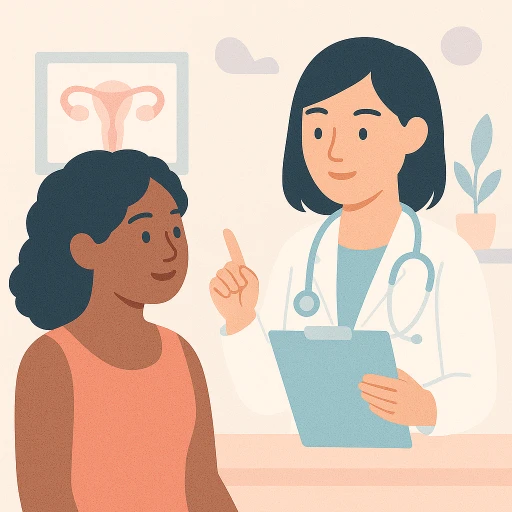
See a doctor or fertility specialist after 12 months of trying if you are under 35, after 6 months if you are 35 or older, and sooner from 40. Don't wait at all if you have irregular or absent periods, endometriosis, past pelvic infection, more than one miscarriage, or a partner with a known issue. A first assessment checks both partners and usually starts with simple blood tests, a scan and a semen analysis.
Key takeaways
- Under 35: see a doctor after 12 months of trying. 35 or older: after 6 months. Over 40: seek evaluation sooner.
- Certain conditions mean you shouldn't wait, such as absent periods, endometriosis or more than one miscarriage.
- Both partners should be tested: a semen analysis is a standard first test.
- First tests are usually simple: blood tests to check ovulation, a scan and an infection check.
- Bringing cycle-tracking data and a list of questions makes your first appointment more useful.
What does a fertility specialist do?
A fertility specialist diagnoses and treats the factors that can make it harder to conceive. In the US this is often a reproductive endocrinologist, which the CDC describes as a health care provider who specializes in managing infertility. In the UK, your GP usually starts the first tests and can then refer you to a specialist infertility team at an NHS hospital or fertility clinic, as the NHS explains.
Seeing a specialist does not automatically mean IVF. Many people get answers from simple tests, and treatment, when needed, ranges from advice on timing to medicines, surgery or assisted conception.
When to see a fertility specialist: timelines by age
The CDC defines infertility as not getting pregnant after 1 year or longer of unprotected sex. Because fertility changes with age, the recommended wait before testing gets shorter as you get older:
- Under 35 with regular cycles: try for at least 1 year before seeing a health care provider, according to the CDC.
- 35 or older with regular cycles: see a provider after 6 months of trying without success.
- Over 40: the CDC says to consider more immediate evaluation and treatment, and Cleveland Clinic advises seeking evaluation after fewer than 6 months.
- In the UK: the NHS suggests seeing a GP after a year of trying, or sooner if you are female and aged 36 or over.
Why the difference? From 35, the chance of pregnancy per cycle falls faster, so time becomes more valuable. Learn more in our guide to age and fertility. If you are still within the normal window, our article on why you might not be getting pregnant yet explains what is usual.
When not to wait: reasons to see a specialist sooner
Some situations mean it is worth getting checked straight away rather than waiting 6 or 12 months. The CDC lists these for women:
- Irregular or absent periods.
- Known endometriosis or very painful periods.
- A history of pelvic inflammatory disease.
- Known or suspected problems with the uterus or fallopian tubes.
- More than one miscarriage.
- Conditions that can reduce the number of eggs, such as previous cancer treatment.
For male partners, the CDC lists testicular injury, previous hernia surgery, previous chemotherapy, past infertility with another partner and sexual difficulties as reasons for earlier evaluation. The NHS also advises seeing a GP sooner if either of you has had cancer treatment or a sexually transmitted infection.
What happens at a first fertility appointment?
Your first appointment is mostly a conversation. According to the NHS, a GP will usually ask about:
- How long you have been trying and how often you have sex.
- Your periods, previous pregnancies and any miscarriages.
- Contraception you have used in the past.
- Medicines you take.
- Lifestyle: smoking, weight, alcohol, drugs and stress.
The NHS notes that women may be weighed and have a pelvic examination, and men may have their testicles and penis examined. It can feel personal, but these questions help the doctor decide which tests make sense first.
How to prepare
- Bring your cycle data: cycle lengths, period dates, ovulation test results, cervical mucus and basal body temperature if you track them.
- Gather medical history for both of you, including operations, infections, long-term conditions and medicines.
- Write down your questions so you don't forget them in the moment.
- Consider bringing your partner or a support person, both for the shared history and for support.
Logging these details in a period tracker like Femininity before your appointment gives your doctor months of real data instead of guesses.
Infertility testing: what to expect
Most first-line tests are simple. The NHS and CDC describe these common tests:
Tests for women
- Blood test for progesterone to check whether you are ovulating. If your periods are irregular, the NHS says hormone tests called gonadotrophins may be offered.
- Ovarian reserve tests, which the CDC lists as including FSH, AMH and an ultrasound count of small follicles, to estimate how many eggs remain.
- Chlamydia test, as past infection can damage the fallopian tubes.
- Ultrasound scan of the ovaries, womb and tubes, sometimes with fluid injected through the cervix to check the tubes are open.
- Hysterosalpingogram, an X-ray with dye to check the tubes.
- Laparoscopy, keyhole surgery that the NHS says is usually only used if a problem is likely.
Tests for men
- Semen analysis, which the NHS says checks for problems such as a low sperm count or sperm that are not moving properly.
- Chlamydia test, usually a urine sample.
Results guide the next step. Sometimes they are reassuring and the advice is simply to keep trying with better timing; sometimes they point to a specific cause that can be treated.
What treatment options might a specialist discuss?
Treatment depends entirely on the cause. The NHS groups fertility treatment into three main types:
- Medicines, for example to help you ovulate if ovulation is irregular.
- Surgical procedures, for example to treat blocked tubes, endometriosis or fibroids.
- Assisted conception, such as intrauterine insemination (IUI) or in vitro fertilisation (IVF), sometimes with donor eggs or sperm.
The CDC notes that timed intercourse is often the first option, and that surgery is now rarely needed because other treatments work well. Cleveland Clinic reports that about 9 in 10 couples get pregnant after fertility treatment, with success depending on the cause, ages and other factors.
Choosing a fertility clinic
If you are referred to or choose a clinic, the UK fertility regulator, the HFEA, advises not to rely only on success rates, since most clinics are broadly as good as each other. Location, opening hours, how patients rate the clinic and other practical factors can matter just as much. The HFEA also notes that every licensed clinic must offer you the chance of counselling.
Looking after yourself while you wait for answers
Fertility appointments can bring up a lot of emotions, from relief at finally doing something to anxiety about results. Both reactions are normal.
- Keep healthy habits that support fertility: stop smoking, limit alcohol, aim for a healthy weight and take folic acid. See our guide to prenatal vitamins and folic acid.
- Talk openly with your partner about how you both feel and what you are and aren't ready for.
- Use the counselling offered by your clinic, or reach out to friends, a therapist or a support group.
- Remember that seeing a specialist is not failing. It is a way to get answers and save time.
When to see a doctor
- You are under 35 and have not conceived after 12 months of regular unprotected sex.
- You are 35 or older and have been trying for 6 months.
- You are over 40 and want to conceive: seek evaluation early.
- Your periods are irregular or absent, or very painful.
- You have endometriosis, a history of pelvic infection, known tubal or uterine problems, or more than one miscarriage.
- You or your partner have had cancer treatment, testicular injury or surgery, or a sexually transmitted infection.
- Seek urgent care for severe pelvic pain, heavy bleeding or fainting, especially with a positive pregnancy test.
Frequently asked questions
Can I see a fertility specialist before trying for a year?
Yes. The 6- and 12-month timelines are about when testing is recommended, not a rule. You can ask your doctor for advice at any point, and you should go sooner if you are over 35 or have a known risk factor.
Do I need a referral to see a fertility specialist?
It depends on your country and insurance. In the UK, you usually start with your GP, who can run first tests and refer you to an NHS fertility clinic; the NHS says all patients have the right to be referred for initial investigation. Elsewhere, you may be able to book directly.
What is a reproductive endocrinologist?
A reproductive endocrinologist is a doctor who specializes in managing infertility, according to the CDC. They can also help people who have had two or more miscarriages.
Should my partner be tested too?
Yes. Both partners should be assessed from the start. A semen analysis is simple, non-invasive and one of the first tests, because sperm problems usually cause no symptoms.
Are fertility tests painful?
Most first tests are simple: blood tests, urine tests and scans are similar to routine checkups. If a test to check the fallopian tubes is recommended, ask your clinic what it involves and what to expect, including pain relief.
Does seeing a fertility specialist mean I'll need IVF?
No. Many people need only advice on timing or a simple treatment such as medicine to help ovulation. IVF is one option among several and is usually considered after other causes and treatments have been looked at.
How do I choose a fertility clinic?
The HFEA suggests looking beyond success rates, since most clinics are broadly as good as each other. Consider location, opening hours, patient ratings and whether the clinic offers counselling and the type of care you want.
How can tracking my cycle help my appointment?
Months of cycle lengths, period dates and ovulation signs help your doctor see whether you ovulate regularly and choose the right tests. It can save time compared with starting from scratch.
Track it in Femininity
Log your symptoms, see your cycle phases and get tips like this one at the right moment. Free, private and works offline.

Sources
- CDC – Infertility FAQs
- NHS – Infertility: diagnosis
- NHS – Infertility: treatment
- Cleveland Clinic – Infertility
- HFEA – Choose a fertility clinic
This article is for general information only and is not a substitute for professional medical advice, diagnosis or treatment. Always talk to a doctor or midwife about your own health.