Why Am I Not Getting Pregnant? How Long It Normally Takes and What Can Help
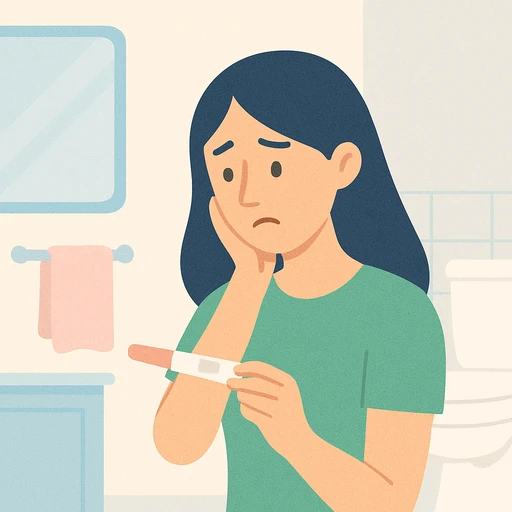
If you are not getting pregnant after a few months, it is usually still normal: even healthy couples have only about a 25–30% chance per cycle in their mid-20s, and most need several cycles. More than 8 in 10 couples where the woman is under 40 conceive within a year. See a doctor after 12 months of trying, after 6 months if you are 35 or older, or sooner if your cycles are irregular or you know of a fertility problem.
Key takeaways
- Each cycle has a limited chance of pregnancy, so most months end without a positive test even when nothing is wrong.
- Most couples conceive within 6 to 12 months of regular unprotected sex.
- Common reasons for delays include missed fertile days, irregular ovulation, age, weight, smoking and sperm quality.
- Fertility is a shared issue: problems with sperm are involved in about a third of cases.
- Seeking help after 12 months (or 6 months from age 35) is a normal step, not a sign of failure.
Why am I not getting pregnant yet? Start with what's normal
When you are trying to conceive, every negative test can feel like a verdict. In reality, not getting pregnant in the first few months is the usual experience, not the exception. Conception depends on a short fertile window each cycle and on many steps going right at the same time, so it is very common for healthy couples to need several cycles.
According to Cleveland Clinic, a 25-year-old has roughly a 25% to 30% chance of getting pregnant each cycle. Put the other way round, around 7 in 10 cycles end without pregnancy, even at peak fertility and even when timing is right.
Over time those monthly chances add up. The American Society for Reproductive Medicine (ASRM) reports that about 80% of couples conceive within the first 6 months of trying, and the NHS says more than 8 out of 10 couples where the woman is under 40 conceive naturally within a year of regular unprotected sex.
How long does it take to get pregnant?
There is no fixed timeline, but the evidence gives a useful picture of what to expect when you have regular unprotected sex:
- Within 6 months: about 80% of couples conceive, according to ASRM.
- Within 12 months: more than 8 in 10 couples where the woman is under 40, according to the NHS.
- After 12 months: doctors define infertility as not conceiving after a year of regular unprotected sex, and recommend an assessment.
- After 3 years: the NHS notes the chance of natural conception in the following year drops to 1 in 4 or less, which is why earlier help matters.
"Regular" sex usually means every 2 to 3 days across the whole cycle. The NHS recommends this rhythm for people aged 39 or under, because it means sperm are likely to be waiting whenever ovulation happens. ASRM adds that sex every 1 to 2 days during the fertile window is the most efficient, but 2 to 3 times a week gives nearly the same results.
How age changes the timeline
Age is the single biggest factor in how quickly pregnancy happens. The Better Health Channel explains that fertility starts a slow decline around 32, speeds up from 35, and by 40 has fallen by about half. Cleveland Clinic puts the chance per cycle at 40 at less than 5%. Male fertility also declines, more gradually, with men aged 45 and over described as less fertile. Read more in our guide to age and fertility.
Many steps have to go right in the same cycle
Conception is not one event but a chain. A small hiccup at any point in one cycle can mean no pregnancy that month, without meaning there is a lasting problem.
- Ovulation: an ovary has to release a mature egg. In some cycles this happens later than expected, or not at all.
- Timing: sperm need to be in the reproductive tract during the fertile window, the 6 days that end on the day of ovulation.
- Sperm journey: enough healthy, well-moving sperm need to reach the egg in the fallopian tube.
- Fertilization: a sperm has to fertilize the egg, which only survives for a short time after release.
- Implantation: the early embryo travels to the uterus and has to implant in the lining.
- Hormonal support: hormones then need to sustain the early pregnancy.
Because so many steps are involved, a single month tells you very little. This is why doctors look at the bigger picture over many months before suggesting tests, unless there is a clear reason to check sooner.
Common reasons you're not getting pregnant
If several months have passed, it can help to look at the most common reasons for delays. Many are easy to check and some are within your control.
1. Missing the fertile window
Your most fertile days are the days just before ovulation, and ASRM notes that the chance is highest when sex happens within 2 days before ovulation. If your cycle is longer or shorter than 28 days, ovulation may not fall on "day 14". Calendar predictions alone are often off: in one study cited by ASRM, the best-performing calendar app predicted the actual ovulation day only 21% of the time. Our guide to the best days to get pregnant explains how to narrow it down.
2. Irregular or absent ovulation
The NHS lists lack of regular ovulation as one of the most common causes of fertility problems, and healthdirect says ovulation disorders are involved in about 40% of women with an infertility issue. Very irregular, very long or absent periods are a clue. Polycystic ovary syndrome (PCOS), thyroid problems, being very underweight or overweight, and severe stress can all disrupt ovulation.
3. Sperm quality
Fertility is a couple's issue. Healthdirect states that about 1 in 3 infertility problems are due to the male partner, and Cleveland Clinic reports a similar split: about a third involves women, a third involves men, and a third involves both partners or is unexplained. Low sperm count or sperm that don't move well cause no symptoms, so a semen analysis is part of every fertility check.
4. Tubes, endometriosis and other conditions
Blocked or damaged fallopian tubes (for example after a past pelvic infection) and endometriosis are listed by the NHS as common causes. Fibroids and other structural changes in the uterus can also play a role. These often need tests to detect, which is one reason not to wait too long if you have painful periods or a history of pelvic infection.
5. Lifestyle factors
- Smoking: the NHS says smoking, including passive smoking, affects your chance of conceiving. ASRM found smokers were more likely to be infertile.
- Alcohol: the NHS says the safest approach when trying is not to drink at all; heavy drinking can also lower sperm quality.
- Weight: ASRM notes fertility rates are lower in women who are very thin or obese.
- Caffeine: ASRM links high intake (more than 5 cups of coffee a day or the equivalent) with lower fertility, while 1–2 cups a day shows no apparent effect.
In about a quarter of couples, the NHS notes, no cause is found at all. This "unexplained infertility" is frustrating, but many of these couples still go on to conceive, with or without treatment.
What you can do to improve your chances
You can't control every step, but you can make each cycle count. These are the changes with the best evidence behind them:
- Have regular sex every 2 to 3 days through the cycle, or every 1 to 2 days during the fertile window if that feels manageable.
- Learn your own ovulation signs. Cervical mucus that becomes clear and stretchy, ovulation (LH) tests and basal body temperature can confirm what an app can only estimate. ASRM notes LH tests give false positives in about 7% of cycles, so combining signs helps.
- Take folic acid before conception, as the NHS advises, along with vitamin D. See our guide to prenatal vitamins and folic acid.
- Stop smoking and avoid alcohol, and encourage your partner to do the same.
- Aim for a healthy weight with a balanced diet and regular activity. Our fertility diet guide covers what to eat.
- Keep caffeine moderate and check any regular medicines with your doctor, without stopping prescribed medicine on your own.
For more practical steps, see how to boost fertility naturally.
Myths about not getting pregnant
- Myth: "If it hasn't happened in three months, something is wrong." Fact: most couples need several cycles, and assessment is recommended after 12 months (6 from age 35).
- Myth: "Saving up sperm by having less sex helps." Fact: ASRM says frequent sex does not lower fertility, and abstaining for more than 5 days may reduce sperm counts.
- Myth: "The app says day 14, so that's my ovulation day." Fact: apps estimate. Body signs and LH tests show what is actually happening in your cycle.
- Myth: "Just relax and it will happen." Fact: severe stress can affect ovulation and libido, but stress is rarely the only reason. Real causes deserve proper checks, not blame.
- Myth: "Fertility problems are a woman's issue." Fact: male factors are involved in about a third of cases.
The emotional side of trying to conceive for months
Trying month after month can wear on your heart as much as your body. Anxiety before testing, disappointment when your period arrives, and comparing yourself with friends who announce pregnancies are all very common feelings. The NHS also notes that the stress of trying can strain relationships and lower sex drive.
- Test at the right time, from the day your period is due, rather than testing very early every day.
- Plan something for yourself around the day your period is due, so the cycle isn't only about the result.
- Talk openly with your partner about how you both feel and about keeping intimacy enjoyable, not just scheduled.
- Reach out to friends, a counsellor or a support group if low mood or anxiety starts to affect daily life.
When to see a doctor if you're not getting pregnant
Seeing a doctor is not giving up; it is a way to save time. Guidance from the NHS, ASRM, healthdirect and Cleveland Clinic lines up on these timings:
- Under 35: after 12 months of regular unprotected sex without pregnancy.
- 35 and older: after 6 months (the NHS suggests seeing your GP sooner from age 36).
- 40 and older: Cleveland Clinic advises seeking evaluation after fewer than 6 months.
- Straight away: if you already know of a possible fertility problem, such as very irregular periods, endometriosis, PCOS, past pelvic infection or cancer treatment, or a known issue in your partner.
A first assessment usually includes questions about your cycles and health, blood tests to check hormones and ovulation, often a pelvic ultrasound, and a semen analysis for your partner. Both partners should be seen, since problems can be on either side or on both.
When to see a doctor
- You are under 35 and have not conceived after 12 months of regular unprotected sex.
- You are 35 or older and have been trying for 6 months (or sooner from age 40).
- Your periods are very irregular, very far apart or absent.
- You have severe period pain, pain during sex or very heavy bleeding, which can point to endometriosis or fibroids.
- You or your partner have a known condition, past pelvic infection, previous surgery or cancer treatment that may affect fertility.
- Sex is difficult or not possible, or your partner has erection or ejaculation problems.
- Seek urgent care for severe sudden pelvic pain, especially with a positive pregnancy test, shoulder-tip pain, fainting or heavy bleeding.
Frequently asked questions
Is it normal not to get pregnant after 3 months of trying?
Yes. Even healthy couples in their 20s have roughly a 25–30% chance each cycle, so several months without pregnancy is common. About 80% of couples conceive within 6 months, and more within a year.
What are the chances of getting pregnant each month?
Cleveland Clinic gives about 25% to 30% per cycle at age 25, falling to under 5% per cycle by age 40. These are averages, and your own chance depends on timing, ovulation, sperm quality and overall health.
Can I be ovulating and still not get pregnant?
Yes. Ovulation is only one step. Sperm quality, open fallopian tubes, fertilization and implantation all need to go right too, and timing must match the short fertile window. That is why regular ovulation does not rule out the need for checks after 12 months.
Could my partner be the reason we're not getting pregnant?
Possibly. About 1 in 3 fertility problems are linked to the male partner, and another third involve both partners or have no clear cause. A semen analysis is a simple, standard test and is part of any fertility assessment.
Does stress stop you from getting pregnant?
Everyday stress is unlikely to be the only reason. The NHS notes that severe stress may affect ovulation and sperm production and can lower sex drive, so looking after your wellbeing helps, but it should not replace a medical check if you have been trying for a long time.
Do lubricants make it harder to get pregnant?
Some water-based lubricants slowed sperm in laboratory tests, but ASRM reports that lubricant use in couples trying to conceive was not shown to lower their monthly chance of pregnancy. If you want to be cautious, ask a pharmacist about sperm-friendly options.
Can I get pregnant if my periods are irregular?
Yes, many people with irregular cycles do conceive, but irregular periods can mean you ovulate less often or unpredictably. Tracking body signs helps you find fertile days, and it is worth seeing a doctor early rather than waiting a full year.
What tests will a doctor do if I'm not getting pregnant?
Usually blood tests to check hormones and confirm ovulation, a pelvic exam and ultrasound, sometimes a test to check the fallopian tubes, and a semen analysis for your partner. The results guide whether lifestyle changes, medication or other fertility treatment is the right next step.
Track it in Femininity
Log your symptoms, see your cycle phases and get tips like this one at the right moment. Free, private and works offline.

Sources
- NHS – Infertility
- NHS – Trying to get pregnant
- ASRM – Optimizing natural fertility: a committee opinion (2021)
- Cleveland Clinic – Infertility
- healthdirect – Fertility and infertility
- Better Health Channel – Conceiving a baby
This article is for general information only and is not a substitute for professional medical advice, diagnosis or treatment. Always talk to a doctor or midwife about your own health.