Heating Pad for Cramps: Does Heat Really Help Period Pain?
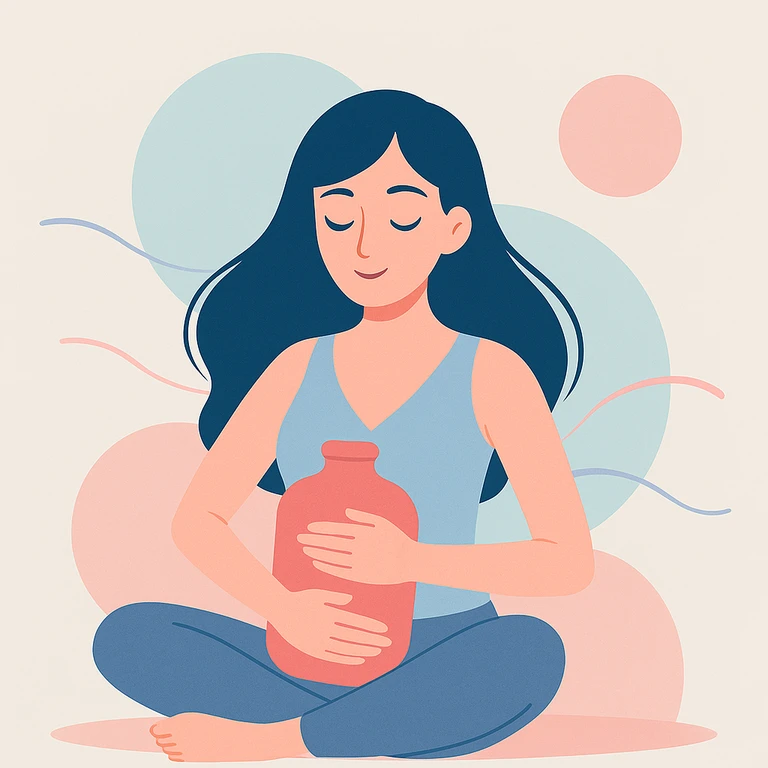
Yes, a heating pad for cramps really can help. Warmth on your lower belly or lower back relaxes tight muscles and eases the dull ache of period pain, and the NHS lists a heat pad or hot water bottle as one of the first things to try. Research suggests heat can reduce period pain compared with no treatment. Use it for about 15–20 minutes at a time, keep it comfortably warm, and see a doctor if pain is severe or keeps getting worse.
Key takeaways
- Heat is one of the simplest, best-studied home remedies for common period cramps.
- A 2026 review of 57 trials found heat likely reduces period pain compared with no treatment and may work about as well as NSAIDs for many people.
- Heating pads, hot water bottles, heat patches and warm baths all work; choose what fits your day.
- Always use a cloth barrier, take breaks and never fall asleep with an electric pad switched on.
- If heat and usual remedies don't help, or pain stops you living normally, talk to a doctor.
Does a heating pad help period cramps?
If you have ever curled up with a hot water bottle on the first day of your period, you already know the answer feels like yes. Science broadly agrees. The NHS recommends using "a heat pad or hot water bottle wrapped in a tea towel on your tummy" and having a warm bath or shower to ease period pain, and Cleveland Clinic lists a heating pad or hot water bottle on your lower back or abdomen among the ways to reduce menstrual cramps.
Heat is cheap, drug-free and can be combined with almost every other remedy. That makes it a sensible first step for most everyday cramps, whether you are at home, at work or trying to get to sleep.
Why heat works on period pain
Period cramps, known medically as dysmenorrhea, happen when the uterus contracts to shed its lining. These contractions are driven by chemicals called prostaglandins. Strong contractions briefly squeeze the blood vessels feeding the uterine muscle, and that is what causes the familiar deep, cramping ache in your lower belly, back or thighs.
Warmth helps in a few ways:
- It relaxes muscles. Heat helps tight muscles in the lower abdomen and lower back let go, which can ease the feeling of tightness and pressure.
- It improves local blood flow. More circulation in the area may help counter the squeezing effect of strong contractions.
- It changes how pain feels. A comforting warm sensation on the skin can make the deeper ache feel less intense.
- It calms you down. Lying still with something warm is relaxing, and stress and tension tend to make pain feel worse.
Heat does not change prostaglandin levels the way anti-inflammatory painkillers do. That is one reason the two can work well together. You can learn more about the causes of cramps in our guide on how to relieve period cramps fast.
What does the research say about heat therapy for period pain?
Heat therapy for period pain has been tested in many clinical trials. A systematic review and meta-analysis published in Frontiers in Medicine in 2026 pooled 57 randomised controlled trials involving 5,359 women with primary dysmenorrhea, meaning common period pain without an underlying condition (Yuan et al., 2026).
- Compared with no treatment, heat therapy was likely to reduce pain intensity, both when used to prevent pain and during acute cramps.
- Compared with NSAIDs (non-steroidal anti-inflammatory drugs), heat may give comparable pain relief, and in some analyses slightly more.
- Heat probably caused fewer side effects than NSAIDs.
The authors use careful words such as "likely" and "may", and the review included many kinds of heat treatment, so the results are encouraging rather than final. In practice it means heat is a reasonable first option for mild to moderate cramps and a helpful add-on when you also need medication. It does not mean you should stop medicine your doctor has recommended.
Heating pad, hot water bottle, patch or bath: which is best?
There is no single "best" heat source. The right one is whatever you can use safely and comfortably at that moment. Here is how the main options compare.
Electric heating pad
Great at home on the sofa or in bed while you are awake. Most pads have adjustable settings, so start low. Look for one with an automatic shut-off, and keep a layer of fabric between the pad and your skin.
Hot water bottle
The classic choice for hot water bottle cramps relief. It moulds to your body and needs no plug. Fill it with hot (not boiling) water from the tap or a kettle that has cooled a little, push out extra air, close it firmly and always use a cover or towel, as the NHS advises. Check the rubber regularly and replace a bottle that looks worn or cracked.
Adhesive heat patches
Thin, disposable patches stick to your underwear or clothing and stay warm for hours. They are discreet enough for school, work or travel. Follow the packaging: most are designed to go on clothing rather than directly on skin.
Warm bath or shower
A warm bath relaxes your whole body and gives you a moment to unwind. In the shower, let warm water run over your lower back for a few minutes. Keep the water warm rather than very hot, especially if you feel faint or light-headed during your period.
How to use a heating pad for cramps: step by step
- Start early. Apply heat when you feel the first twinges or as bleeding starts, before cramps peak.
- Wrap it. Put a towel, cover or layer of clothing between the heat source and your skin.
- Place it well. Rest it on your lower belly, just above the pubic bone, or across your lower back.
- Set a comfortable temperature. It should feel pleasantly warm, never hot or stinging.
- Time it. Use heat for about 15–20 minutes, then remove it and let your skin cool and return to its normal colour.
- Get comfortable. Lie on your side with your knees pulled towards your chest, or on your back with a pillow under your knees.
- Breathe slowly. Breathe in for about 4 seconds and out for 6–8 seconds while the warmth works.
- Repeat if needed. After a break, you can reapply heat as many times as you need through the day.
Heat also pairs well with gentle stretching. Warming the area first can make moves like child's pose or knees-to-chest feel easier. See our ideas for exercise on your period.
Using heat safely: avoid burns
Heat feels so soothing that it is easy to overdo it. Low-level burns can happen even at temperatures that do not feel dangerous, especially with long contact or if you fall asleep.
- Never put a heat source directly on bare skin. Always use a cloth barrier.
- Don't sleep with an electric heating pad switched on. If you use one in bed, switch it off before you drift off. Our guide to sleeping better during your period has other comfort ideas.
- Take breaks. Check your skin between sessions. If it is very red, sore, blistered or irritated, stop and let it cool.
- Be extra careful if you have reduced feeling in your skin, for example from diabetes or nerve damage, or if you have taken something that makes you drowsy.
- Don't use boiling water in a hot water bottle, and don't use a bottle that is old or damaged.
- Keep electric pads in good condition. Don't use one with frayed wires, and follow the manufacturer's instructions.
If you do burn yourself, the NHS advises holding the burn under cool running water for 20 minutes as soon as possible, not putting creams, oils or butter on it, and not bursting blisters. Seek urgent medical help for large or deep burns.
Combining heat with other period pain relief
Heat works well alone for many people with mild cramps, but on your heaviest or most painful days, combining approaches often helps most.
- Heat + painkillers: NSAIDs such as ibuprofen or naproxen lower prostaglandin production, which heat does not. Cleveland Clinic notes NSAIDs are often the first treatment for dysmenorrhea. Follow the leaflet and ask a pharmacist whether they are suitable for you. Compare options in the best pain relief for period cramps.
- Heat + movement: a short walk, hip circles or gentle yoga after warming up can ease tension.
- Heat + relaxation: slow breathing, a calming podcast or meditation while the warmth works.
- Heat + hydration: a warm drink such as ginger or peppermint tea adds comfort and keeps you hydrated.
If you need heat and painkillers around the clock every month just to get through your period, that is worth discussing with a doctor.
Track what works for your cramps
Everyone's period pain is different. Logging when you use heat and how much it helps can show you patterns over a few cycles. You might find that heat alone is enough on day three, but that you need it together with medication on day one.
- Rate your pain from 1 to 10 before and after using heat.
- Note which heat source you used and for how long.
- Add other symptoms such as bloating, mood and sleep.
A period tracker like Femininity can predict when your next period is due so you can pack a heat patch in advance. Your notes are also useful if you ever need to describe your pain to a doctor.
When to see a doctor
- Your period pain stops you doing your usual daily activities, such as school or work.
- Heat, rest and painkillers don't help, or your cramps last more than about three days.
- Your periods become more painful, heavier or irregular than usual.
- You have pain during sex, or when peeing or pooing, or you bleed between periods.
- You have a swollen tummy, loss of appetite or lose weight without trying.
- Get urgent help (an urgent GP appointment or NHS 111 in the UK) if your pelvic or period pain is severe or worse than usual and painkillers haven't helped.
- Seek emergency care for sudden severe pelvic pain, pain with fever, or pain with bleeding when you could be pregnant.
- Get medical help for a heat burn that is large, deep or blistering badly.
Frequently asked questions
How long should I use a heating pad for cramps?
About 15–20 minutes at a time is a good starting point. Then remove it, let your skin cool and check it before reapplying. Avoid leaving a heating pad on continuously for hours, and never while you are asleep.
Is it better to put heat on my stomach or my back?
Both can help. Most people put heat on the lower belly, just above the pubic bone, but if your cramps spread to your lower back, heat there can bring as much or more relief. You can use two heat sources at once.
Is a warm bath as good as a heating pad for cramps?
For many people a warm bath or shower relaxes the whole body and eases cramps nicely, and the NHS recommends both. A heating pad gives longer, targeted warmth. You can combine them, using a pad after your bath.
Can heat replace painkillers for period pain?
For mild to moderate cramps, heat alone is often enough, and research suggests it may relieve pain about as well as NSAIDs for some people. For stronger pain, heat works well alongside painkillers. Don't stop medication a doctor has prescribed without talking to them.
Can I sleep with a heating pad for period cramps?
It's best not to fall asleep with an electric heating pad switched on because of the risk of burns. Use it to get comfortable, then switch it off. A heat patch worn over clothing and used as directed on the packaging, or a wrapped hot water bottle you move away before sleep, are alternatives.
Do heat patches work for period cramps?
Yes, many people find adhesive heat patches helpful because they give steady, low warmth for hours and can be worn discreetly. Follow the instructions on the packet, which usually say to place them on clothing rather than bare skin.
Is it safe to use a heating pad every day of my period?
Generally yes, as long as you use a comfortable temperature, a cloth barrier and regular breaks. If your skin becomes irritated, or you need heat constantly and your pain isn't improving, talk to a healthcare professional.
Should I use heat or ice for period cramps?
Heat is the option health services such as the NHS recommend for period pain, because warmth helps tight muscles relax. Cold is more often used for injuries and swelling. If your bleeding is very heavy or you pass large clots, see a doctor whichever remedy you use.
Track it in Femininity
Log your symptoms, see your cycle phases and get tips like this one at the right moment. Free, private and works offline.

Sources
- NHS – Period pain
- Cleveland Clinic – Dysmenorrhea
- Yuan D et al. – Heat therapy for primary dysmenorrhea: a systematic review and meta-analysis (Frontiers in Medicine, 2026)
- NHS – Burns and scalds
This article is for general information only and is not a substitute for professional medical advice, diagnosis or treatment. Always talk to a doctor or midwife about your own health.